It was a line from Rick Davies's song "Asylum" that sparked photographer Paul Wakefield's creative imagination. Tasked with delivering an eye-catching image for the cover of Supertramp's third album, Crime of the Century, Wakefield had been invited to the recording studio by A&M Records art director Fabio Nicoli to meet the band and get a sense of their music. He had never shot an album cover before, but Nicoli was confident that he was the right man for the job.
Still, there was little for Wakefield to go on at this point; Supertramp's first two albums had received so little attention that he wasn't familiar with their work, and this new album was far from finished. But when someone handed him a few sheets of lyrics to mine for ideas, the words "When they haunt me and they taunt me in my cage" jumped out at him.
Wakefield immediately envisioned the iron bars of a prison cell. That fit right in with the theme of the title track, so he set to work developing ideas. Of course there were a few false starts – he would recall one especially graphic image of a stabbed teddy bear laying in a squalid alley with its entrails spilled out, which was quickly dismissed – but the original vision of the cell bars stayed with him. The "crime of the century" had to be punished appropriately, so instead of simply rendering a prison cell, Wakefield took it a step further and sent the cell into space, where escape was impossible.
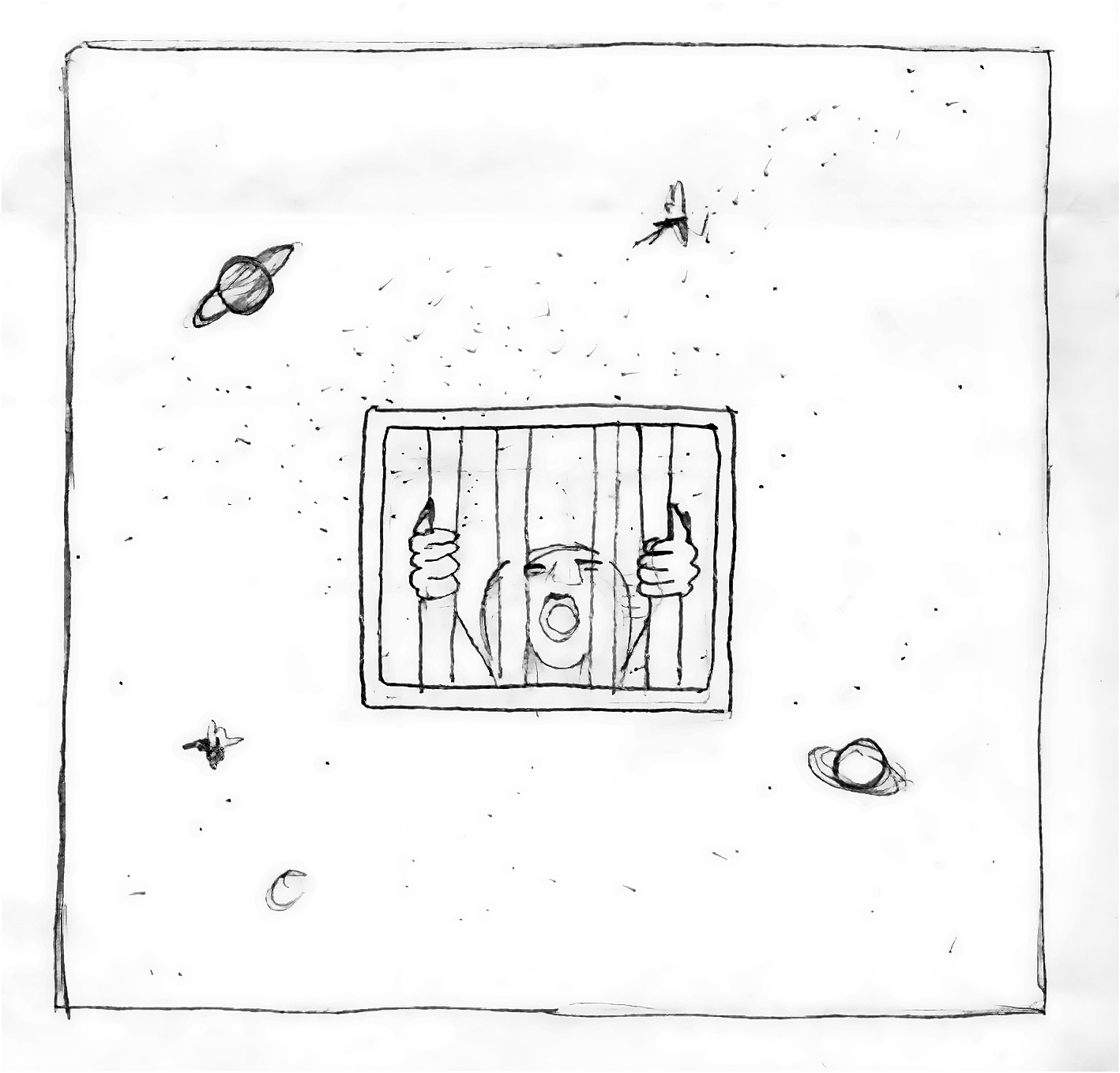
An early pencil sketch showed a person screaming while clutching the bars, another with one helpless hand reaching out in despair. Both were well received by Nicoli and the band, which inspired Wakefield to fine tune it down to the more subtle but much more powerful image of just both hands gripping the bars. This idea was ultimately chosen. "It shows a resignation to fate that the other didn't have," Wakefield recalled. "It felt like there would be no reprieve."
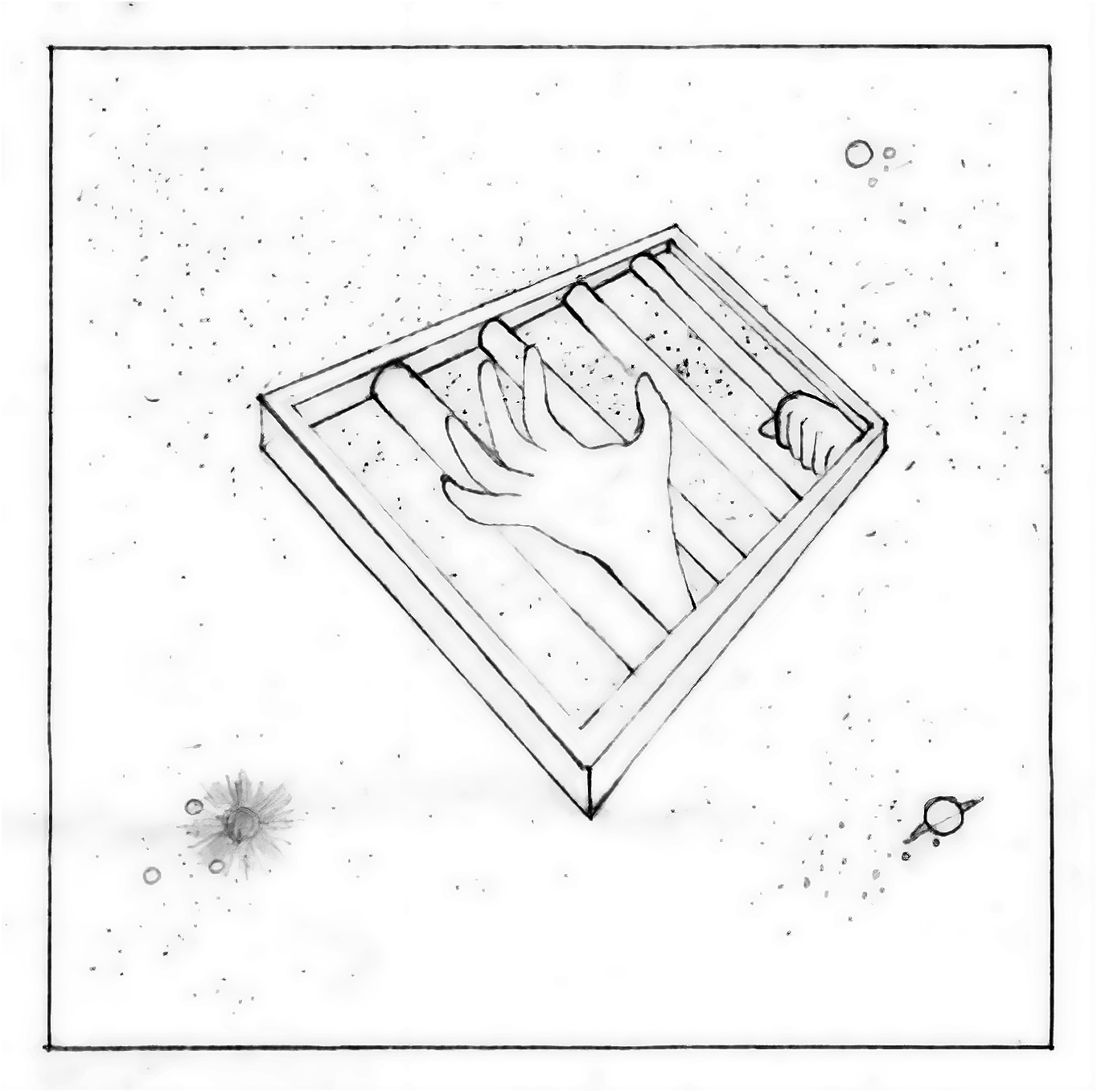
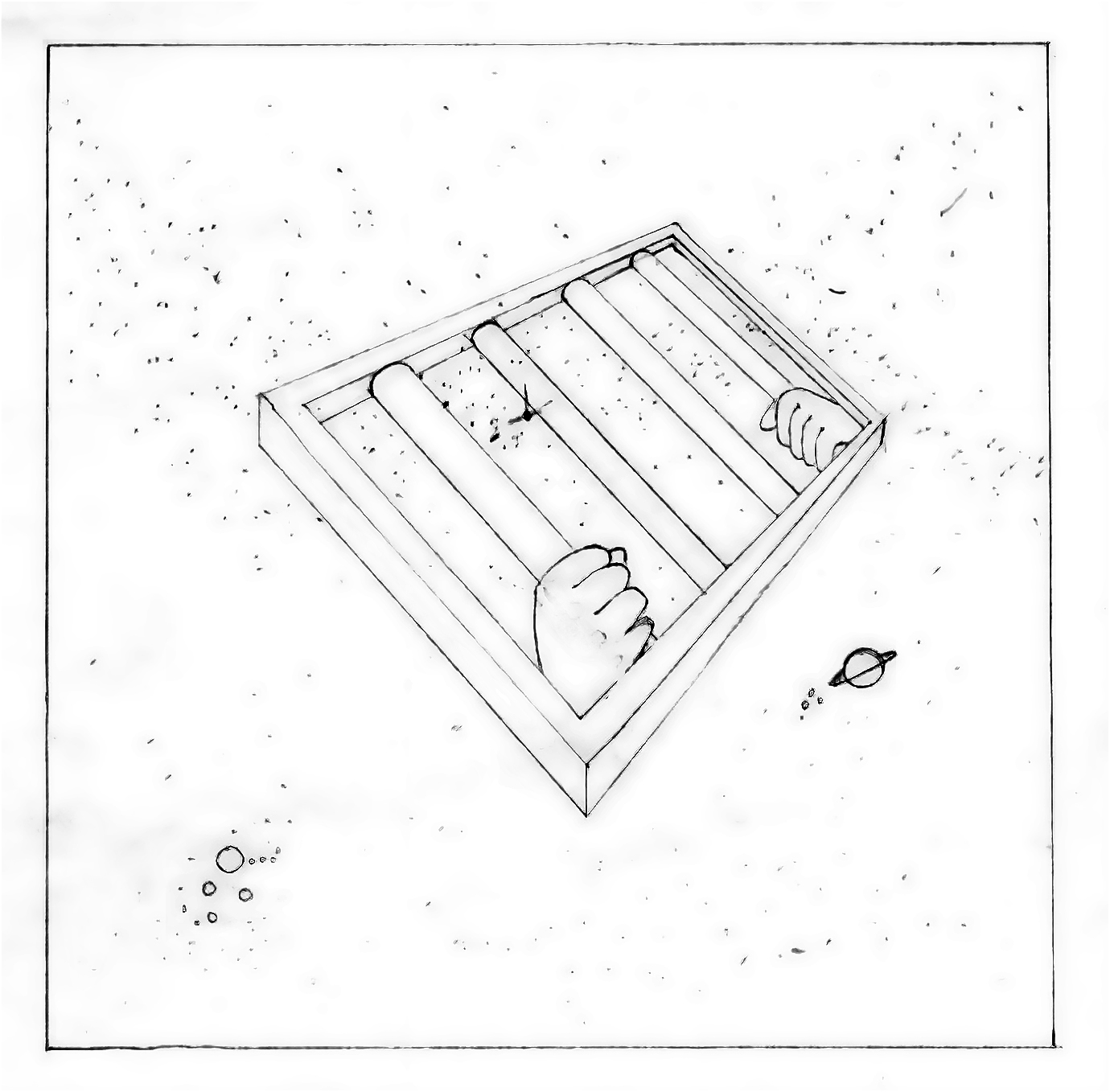
Of course today the whole thing could be done relatively quickly with digital imaging, but the darkroom technology of 1974 meant a long and laborious process whereby Wakefield had to do everything by hand. First, he created the cell window by having a friend set four polished aluminum bars into a frame and weld it onto a stand. He then drafted his twin brother to grip the bars, his hands whitened with theatrical makeup to stand out. The shot wasn't as easy as he'd hoped; his brother had to contort himself so that only his hands would be visible. Using an antique 5 × 7 mahogany camera, Wakefield shot a series of transparencies and double-exposed them against a large sheet of black cardboard punctured with hundreds of small perforations, ranging from pin-pricks to pencil-sized holes. Lit from behind, it produced a starry space effect.
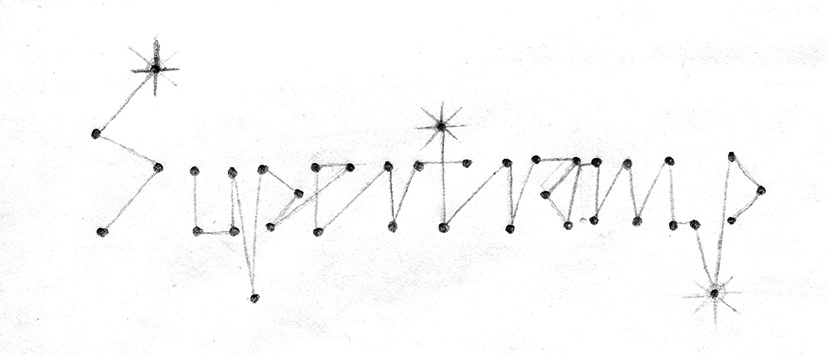
The photo was eye-catching and dramatic. Wakefield knew that the band's name had to fit flawlessly into the starscape, so he created the iconic logo by spelling out "Supertramp" as a constellation above the cell bars, linking the stars with straight white lines. "It's possible that I did it on acetate instead of black card to make sure of clean lines," he recently recalled. "But I must admit that it's so long ago now that I can't be absolutely sure."
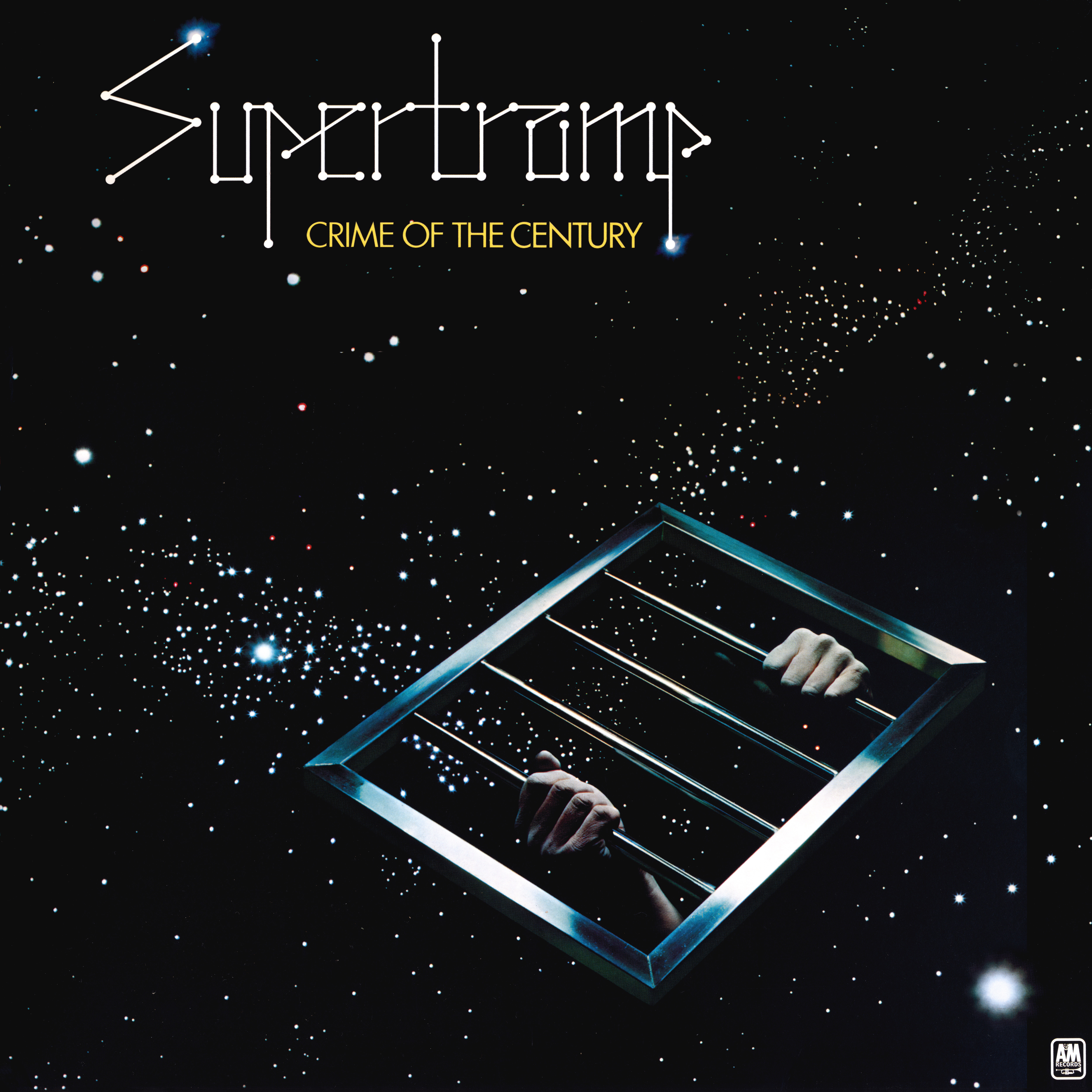
The result was such a hit with the band and A&M Records that Nicoli retained Wakefield to create the cover of Supertramp's next album, Crisis? What Crisis?, the following year. But it would be the Crime of the Century cover – those hands clutching the bars while floating through space – that even 50 years later remains not only the single image most closely associated with Supertramp, but one of the most recognized album covers of the rock era.
Adapted from a text by Mike Goldstein, posted in December 2014 on AlbumCoverHallofFame.com