(audio on please)
Rick&
Roger&
Dougie&
Bob&
John.

Planning the Perfect Crime

1969

It began with an ad in the classified section of the August 9, 1969, issue of Melody Maker, offering a "genuine opportunity for good musicians." Keyboardist Rick Davies, freshly returned from touring the continent and looking to start a new group, had placed the ad. That's how he met guitarist Roger Hodgson. Initially performing as Daddy, they soon renamed themselves Supertramp, inspired by W. H. Davies's 1908 memoir The Autobiography of a Super-Tramp.

If opposites attract, this partnership was destined. Rick and Roger came from different social backgrounds and drew from distinct musical influences, creating a complex blend of writing styles and interpretations. Rick's working-class roots and blues-driven keyboard work clashed productively with Roger's more privileged upbringing and pop sensibility. Shaping their divergent visions into something cohesive took time, dedication, and persistence. Supertramp was never easy to categorize. They wove elements of jazz and blues with catchy pop hooks to produce a unique sound.

False Starts

1969 - 1972

Other players were recruited, and Supertramp played clubs, halls, and colleges, mostly in England. The gigs came, but success didn't. After signing to A&M Records in 1970, they recorded two promising but overlooked albums: Supertramp (1970) and Indelibly Stamped (1971). Both were self-produced, and both were largely ignored.

While Roger handled most vocals on the first album, Indelibly Stamped found Rick stepping up to share singing duties. "It was Roger who encouraged me to sing more," Rick recalled. "He felt that bands should have more than one singer."

During this period they cycled through several lineups, but success remained elusive, and by mid-1972 the situation had become desperate. Rick and Roger had to confront a harsh reality: they were virtually destitute and facing the breakup of the partnership. They believed, however, that their material was far better than their circumstances suggested. They decided to rally for one more attempt. Another ad appeared in Melody Maker, this one seeking a bass player.

Rebirth

1972 - 1973

Glaswegian Dougie Thomson saw the ad and showed up at the chaotic audition at the Pied Bull Pub in Islington. Memorably, Rick was at the piano with a sleeping bag draped over his shoulders and wearing a crash helmet. A few days later Dougie got a call. "I was the only one they could remember," he said. He joined as a bassist in mid-1972, allowing Roger, who had been covering bass duties, to shift to guitar.

But Thomson brought more than basslines. Before long, the band's energetic but soft-spoken new member found himself handling practical matters: finding new players, negotiating with the record company, and generally serving as a refreshing, motivating force at the lowest point in the band's history.

Dougie reached out to A&M looking for a fresh start. Label executives, at first assuming he was coming to ask for a release from their contract, instead introduced him to Dave Margereson, A&M's artist and repertoire (A&R) man, who would become central to the band's career. He had been tasked with reviewing the A&M roster, especially those whose contracts were up for renewal. He was fascinated by the potential of Supertramp's two writers and felt that they should be given a second chance. Margereson went to see the band live several times and liked them, especially the new songs, "Dreamer" and "Bloody Well Right."

Still, the band remained more vision than reality, more potential than proof. Margereson provided financial and personal support throughout the process of finding new band members. He encouraged them to develop and strengthen their material, and to rehearse and prepare for recording. He was a believer when believers were scarce. Before long he was involved closely in their A&R, and within a year became their manager.

Rick had noticed Bob Siebenberg, the California-born drummer for Bees Make Honey, a popular British pub band, at a gig. Rick and Roger invited him to jam in late May 1973. They liked what they heard, and Bob joined soon after. Now it was Rick, Roger, Dougie, and Bob.

To round out the new lineup, they wanted a woodwinds player. Dougie recruited his former bandmate from the Alan Bown Set, saxophonist John Anthony Helliwell. John was never formally asked to join. He simply kept coming back to blow with them, session after session, until one day everyone realized he was just … in. "They liked my jokes," John would later explain. It was he who dubbed the band's sound "sophistorock."

The band was complete.
Three Englishmen, a Scot, and an American.

With the classic lineup finally in place, they recorded Rick's "Summer Romance" and Roger's "Land Ho." The self-produced single was released in early 1974 with little fanfare and received even less notice. Later, A&M brought in producer Ken Scott to remix "Land Ho," but his version wouldn't be released for decades.

What the band needed now was the right song, or better, the right album.
Southcombe

1973

Dave Margereson had become a true believer in the new material. He put forward an ambitious plan for what would become Crime of the Century. Rather than rush the band into the studio, A&M rented Southcombe, a farmhouse near Thorncombe, Dorset, about 140 miles southwest of London. It was an environment with few distractions and conducive to creativity. Here the album took shape.

Southcombe was large enough to accommodate everyone: the five band members, wives, children, girlfriends, cats, South African soundman Russel Pope, and assorted friends who drifted through. With primitive equipment set up in the cottage's main rooms, they worked up material for the new album. Tapes flowed back and forth between Margereson and the group.

Everyone wanted Ken Scott to produce. He had engineered albums by The Beatles, David Bowie, Jeff Beck, George Harrison and Mahavishnu Orchestra, amongst others. Scott had exactly the kind of pedigree a struggling progressive rock band needed. But he balked at the idea. Margereson kept at him, sending new tapes, but still no interest.

A&M set up a showcase gig and persuaded Scott to attend. After seeing the band perform live, his opinion changed dramatically. He realized they were far better than their demos suggested, and recognized how important this album had to be, how special it could be.

After some pre-production work at Southcombe, the band moved to London's Trident Studios in February 1974 to record in earnest.

Release and Reception

1974

Scott recalls it as "a slow process that at one point got us all very worried about taking so much time." After two weeks, word came that Jerry Moss – the "M" of A&M Records – was coming to the studio to check their progress.

Only the basic tracks had been recorded, without vocals. There was real anxiety about rejection, about the label losing faith after investing so much in a band that had delivered nothing but commercial disappointment.

Moss came. Moss listened. Forever the gentleman, he thanked Scott and the band and left without saying anything.

Everyone immediately thought the worst. It was over.

"How could someone from a label have the foresight to see where we were going with this?" Scott wondered aloud. The mood was grim.

Although they didn't feel like it, they decided to return to the studio the next day and carry on until the axe fell.

After they arrived at Trident, Margereson called with news. Moss loved what he'd heard. He was actually blown away. The message from the top of A&M Records was clear: "You can have as long as you need and do whatever it takes to bring this album to fruition."

The band exhaled and got back to work.

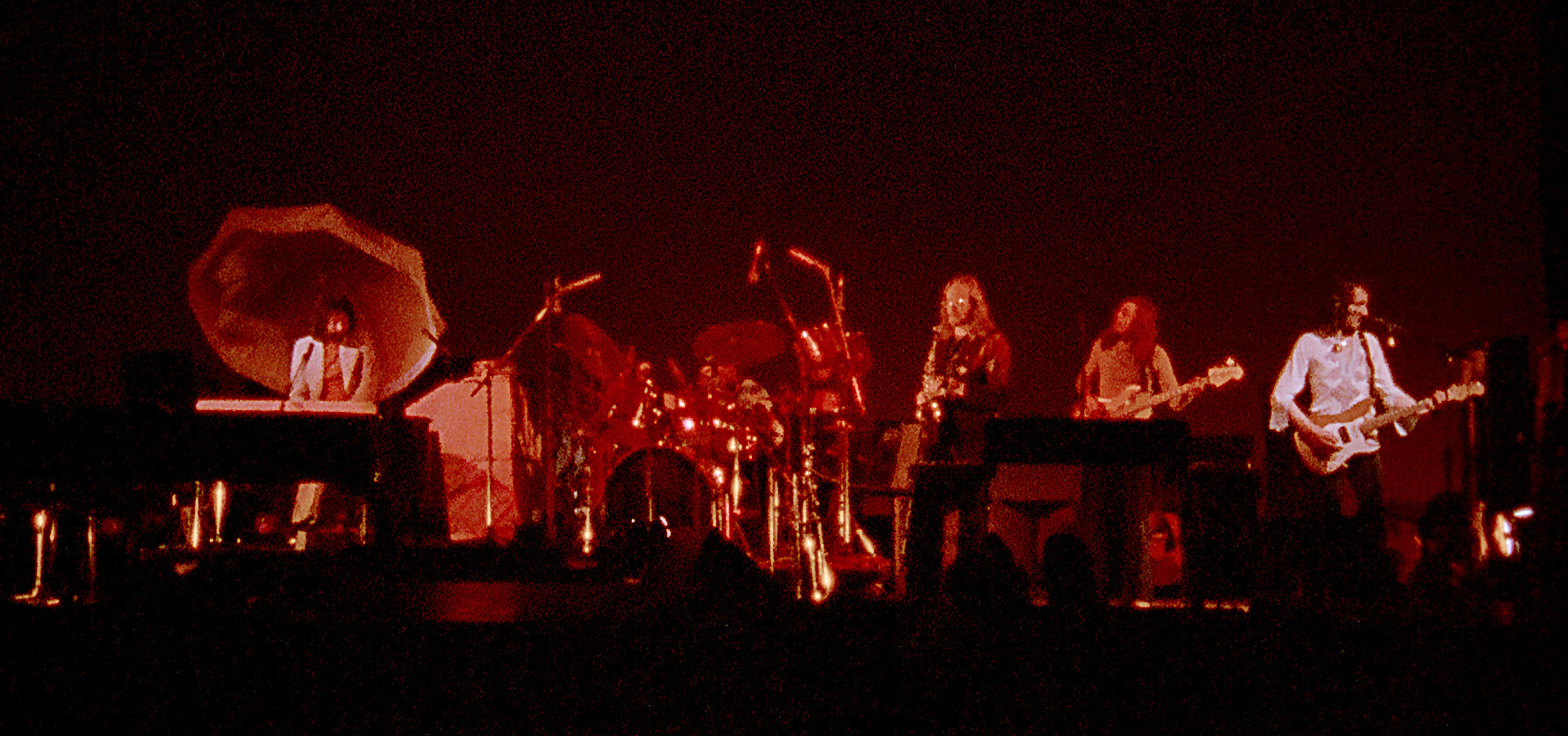
While recording continued, other members of the entourage began planning the live show. Contrary to the practice of the time – renting sound and lights from companies that serviced many touring bands – Supertramp designed and owned their own audiovisual setup. Russel Pope and fellow South African Tony Shepherd had been with the band from its earliest days, the first non-musicians to join the ensemble.

Pope's philosophy was uncompromising: it had to sound the same live as it did on the record. He worked tirelessly with the crew to fine-tune the presentation, and his soundchecks were sometimes longer than the gigs themselves. But whatever the venue – club, theatre, or hall – it "sounded like a giant stereo."

Shepherd brought a theatrical sensibility to the visuals, working with new technical guru Ian Trevor Lloyd-Bisley (aka Biggles) to create something beyond the standard rock light show. They wanted visuals that included a film synchronized with the live music, which presented a technical challenge in the mid-1970s.

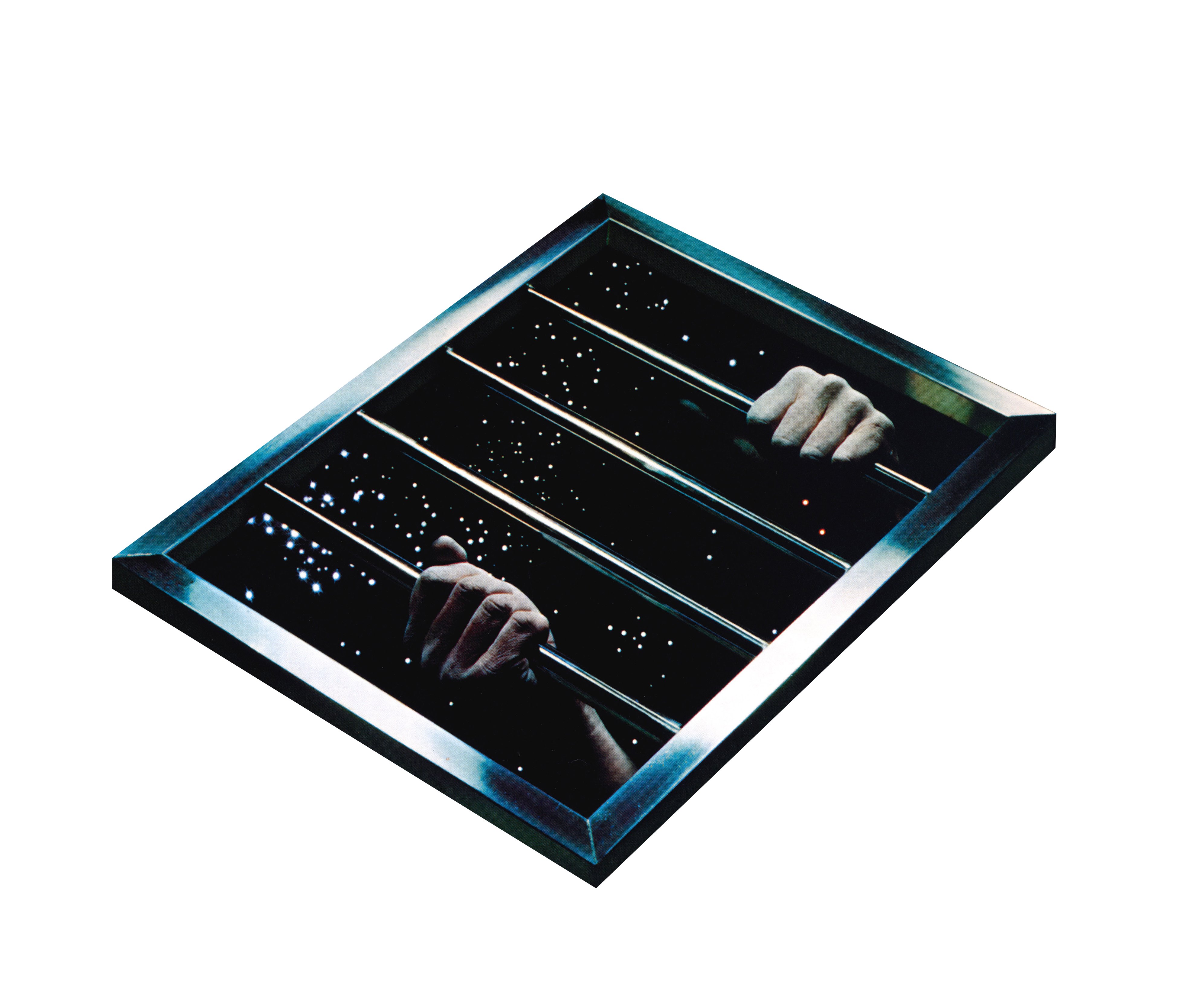
For the album itself, they wanted the cover to make a graphically strong statement. The title alone – Crime of the Century – was bold, even arrogant for a band that had released two commercial failures. A&M brought in photographer Paul Wakefield to create artwork that would match that ambition. His design of the hands gripping the jail bars floating through space became the iconic image that would define the band's visual identity for years to come.

Everyone understood the importance of what they were creating, which led to an obsession with getting it absolutely right, no matter how long it took. In an era when albums were knocked out in days or weeks, this one was taking months.

No one at the label objected. They liked what they heard and encouraged the band every step of the way.

Crime of the Century was released in the fall of 1974 to positive reviews in the UK and Europe. Production, sound design, and instrumentation were widely praised; the crisp piano, harmonica, sax, and the drama of the arrangements all got favourable mention. Some critics commented on the album's dark social commentary – alienation, conformity, and loss of innocence – as being unusually mature for a band that had previously struggled to find its identity. The release of "Dreamer" in early 1975 proved pivotal, with the single's distinctive charm resulting in widespread radio airplay across the UK. Record buyers responded and the album marked the group's commercial breakthrough in their home country. Germany, France, and the Netherlands followed suit.

The album's reception in the US was initially modest. Some critics found it pretentious, but many admired its sound and ambition. "Dreamer" was released as the single, but it was the flip side – "Bloody Well Right" – that became the track that established the band on FM radio. This momentum was supported by a heavily promoted tour across the country.

Canada was particularly enthusiastic in its embrace of Crime of the Century, much more so than the US. The combination of radio, press, and touring helped make Crime a resounding success.

Touring Crime of the Century

1974 - 1975
Live at Hammersmith

From mid-September to early March the band toured relentlessly in support of Crime of the Century, playing more than 45 shows, mostly in England, but a few in Scotland and Wales, and others in Denmark, the Netherlands, and France.

Pope's sound system delivered on its promise. Night after night, the album's intricate arrangements translated to the stage with remarkable fidelity. This part of the tour culminated at London's Hammersmith Odeon on March 9, 1975, before a rapturous audience of 3,000.

Less than a month later, Supertramp's tour of North America started.

The usual strategy for a new, emerging band was to establish a radio presence, then tour. Supertramp tried something new and innovative in order to make a deep impression the first time around.

Instead of playing clubs or as an opening act on a big tour, they booked a headline tour – 20+ shows – in theatres across the country. Management, the booking agent, and A&M made it happen. As the band was largely unknown, few tickets were sold, and they had to give away the majority of them. A clever method was devised: radio stations had contests in which the fifth caller would win a ticket, except that anyone who called was the fifth caller! The venues were full, the spark lit, and Supertramp's reputation as a premier live band was born. Using the stage presentation that had worked so well in England, the band made a lasting impression on early fans and word of mouth expanded their fan base. When the band returned to cities on subsequent tours, sellouts were routine.

Audiences in Canada were much more receptive. The album sold well, and the concerts were well attended without resorting to giveaways. Supertramp's show at Montreal's Centre Sportif in early April drew 5,000 fans, the band's largest crowd to date. In mid-August they returned to Montreal for a show at Place des Nations, and the attendance record of their previous show was eclipsed.

Crime of the Century and its supporting tour were a resounding success, but for Supertramp it was just the beginning.